

Higher education has spent the past decade investing heavily in digital recruitment. Institutions have launched virtual campus tours, redesigned admissions websites, expanded social media strategies, and adopted CRM platforms to engage prospective students better.
Today's leading institutions are exploring a different one:
"How do we let students experience campus in a way that's personal, interactive, and continuous?"
That's an important distinction.
Generation Z and Generation Alpha have grown up expecting digital experiences to adapt to them. Spotify builds playlists around their interests. Netflix recommends content based on their behavior. Even retail websites remember where they left off.
University recruitment is beginning to follow the same path.
Three emerging technologies are helping institutions move beyond static virtual tours toward recruitment journeys that feel personalized from the first interaction through campus visit.
1. Personalized XR Lead Generation: Let Students Design Their Own Campus Tour
Not every prospective student comes to campus looking for the same thing.
A future engineering student wants laboratories. A first-generation student may want housing and student support. An athlete wants facilities.
Yet most virtual tours still deliver identical experiences to everyone. Some institutions are beginning to change that.
Case Study: Appalachian State Let Students Build Their Own Journey
Instead of immediately launching visitors into a standard virtual tour, Appalachian State University first invites prospective students to tell the university what they're interested in.
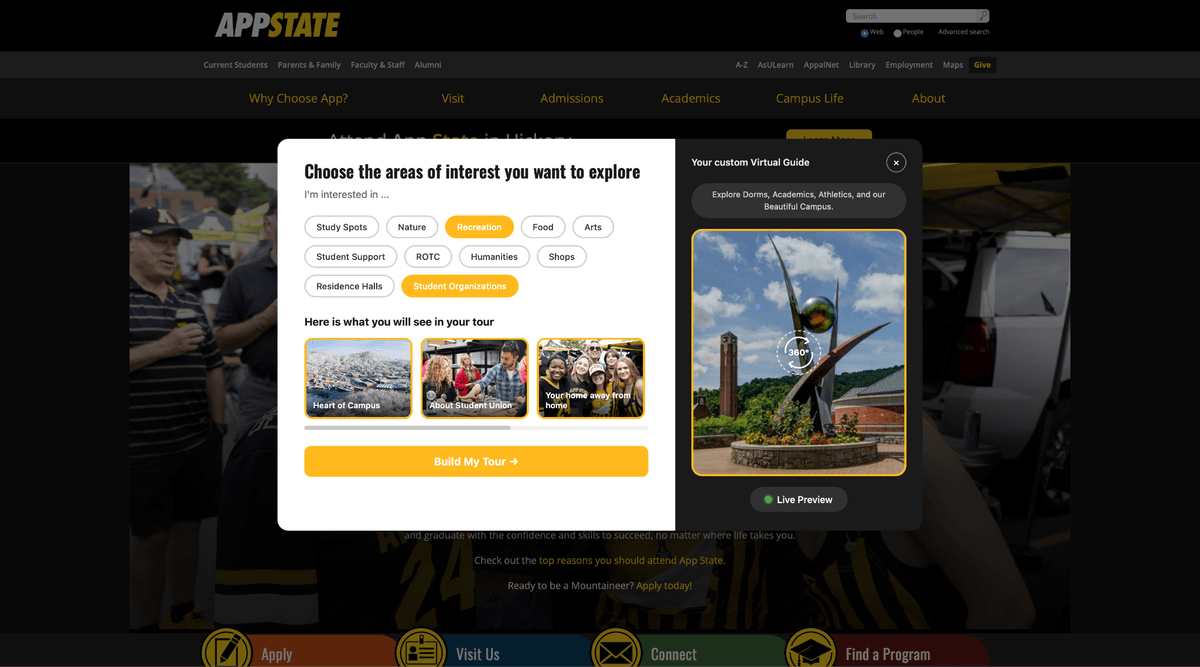
Students select the topics that matter most, such as academics, residence life, student organizations, athletics, or nature around campus.
The result is a personalized 360° campus experience delivered directly to their inbox, allowing each student to explore the campus through the lens of their own interests.
For admissions teams, this creates something equally valuable.
Every interaction becomes first-party recruitment data. Rather than simply collecting an email address, the university gains insight into what prospective students actually care about before the first admissions conversation begins.
Personalization isn't just improving the student experience. It's improving recruitment intelligence.
2. Interactive Campus Kiosks: Transform Every Building Into a Recruitment Hub
Campus visits remain one of the strongest predictors of enrollment. But between information sessions and guided tours, students often spend significant time waiting.
Leading institutions are beginning to see those moments differently. Instead of waiting time, they're becoming exploration time.
Case Study: Pace Turning the Welcome Center into an Interactive Discovery Space
At Pace University, visitors can explore the university through an interactive kiosk experience before ever joining a tour.
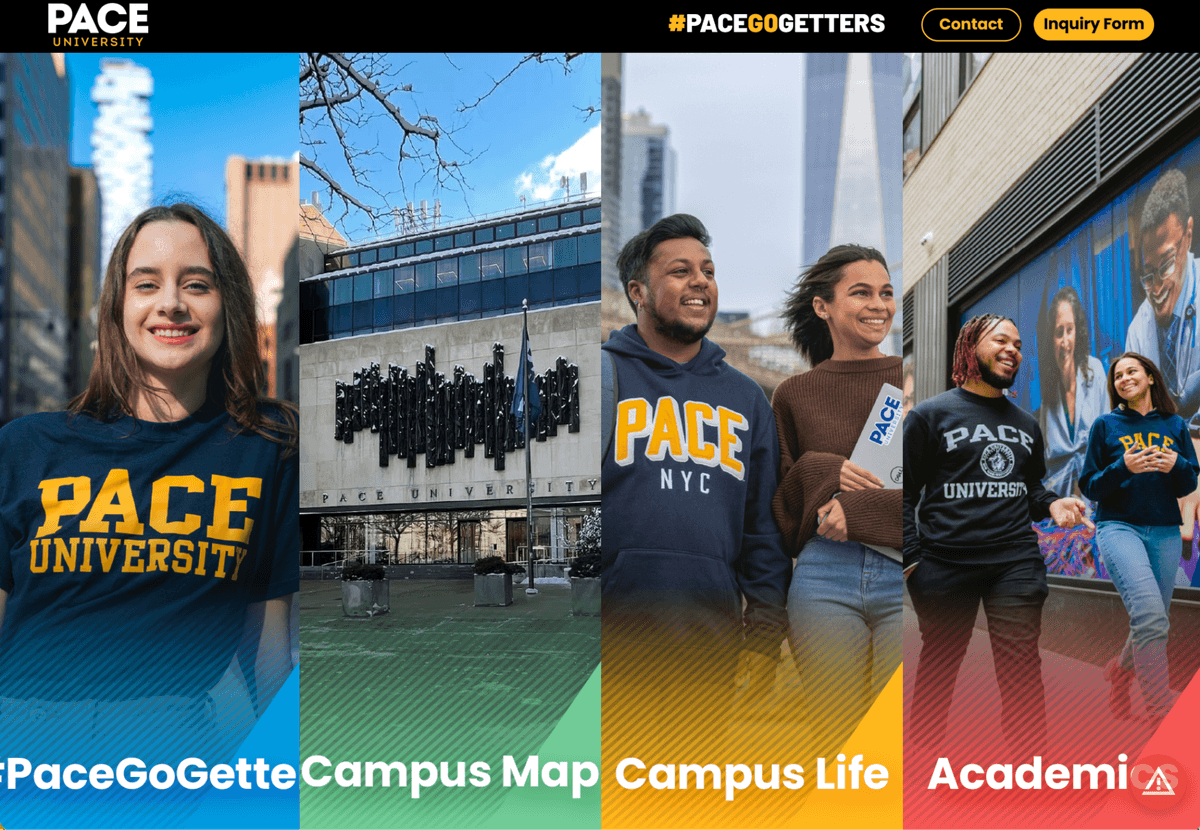
Using large touchscreens, students browse academic programs, watch campus videos, explore residence halls, and launch immersive experiences on demand. Rather than relying on printed brochures, the content remains dynamic and can be updated throughout the year.
Admissions staff benefit as well.
Instead of answering introductory questions repeatedly, counselors begin conversations with visitors who already have context and are ready to ask deeper questions.
The result isn't replacing admissions staff. It's making every conversation more meaningful.
3. AR Wayfinding: Turning Navigation Into Engagement
Campus navigation has traditionally been functional. Its purpose was simply to help visitors get from one building to another.
But AR is changing that.
Rather than relying on printed maps or temporary signage, browser-based AR wayfinding overlays digital directions directly onto the real world. Visitors simply scan a QR code and follow intuitive visual guidance through their phone browser, without downloading an app.
The opportunity extends well beyond navigation.
As visitors move through campus, institutions can surface contextual content tied to specific locations, from welcome videos and historical facts to faculty highlights, student stories, or event schedules. Every stop becomes another opportunity to reinforce institutional identity.
Case Study: Guiding Thousands of Alumni Across Multiple Event Venues
For a recent university anniversary celebration spanning four hotels across Beijing's CBD, CampusXR developed a browser-based AR wayfinding experience that guided alumni and guests between venues while providing event information throughout the journey.
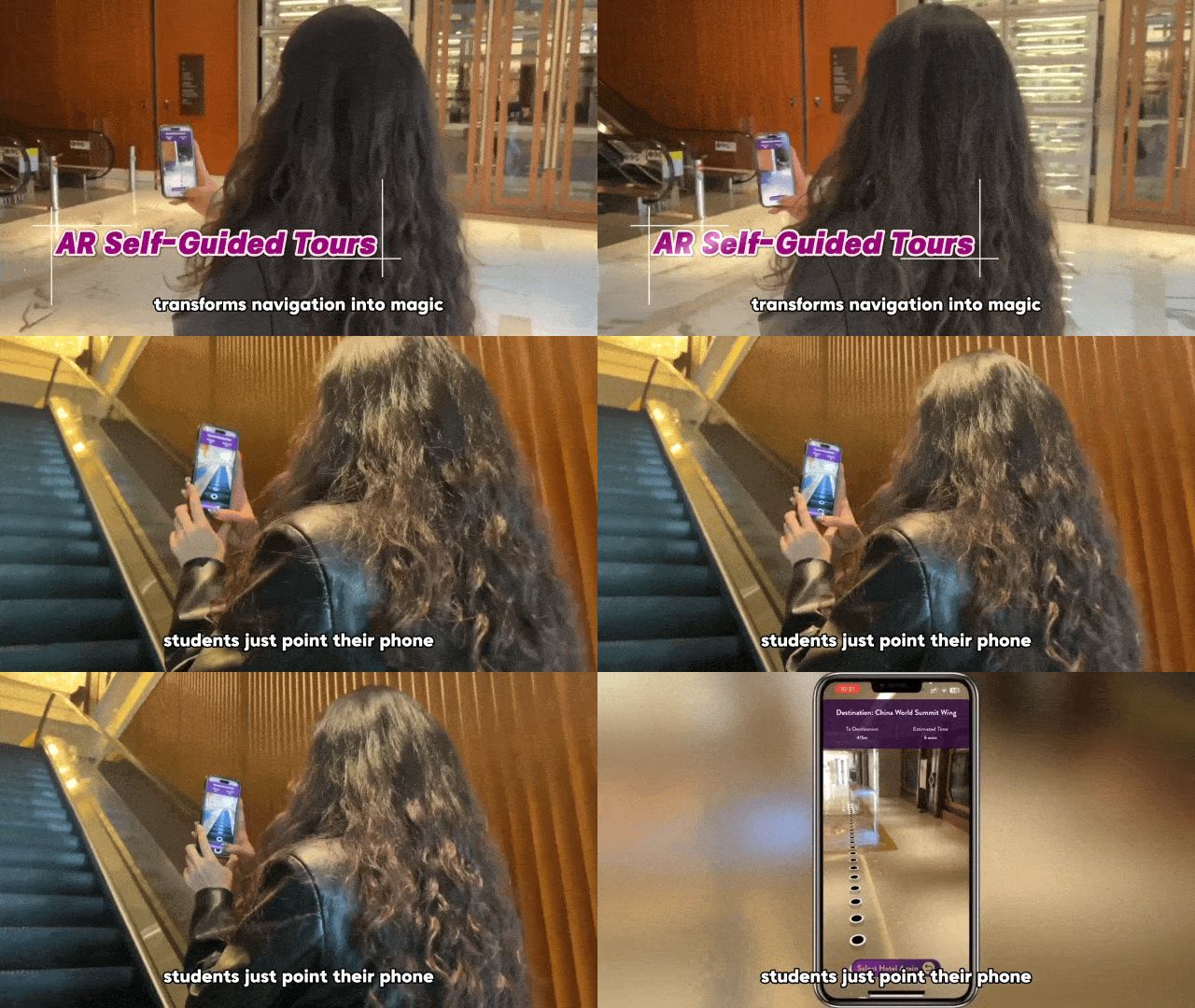
Instead of distributing printed maps or relying solely on volunteers, attendees simply scanned a QR code to access real-time directions. Along the way, the experience could highlight key event locations, schedules, and important announcements, creating a smoother and more engaging visitor experience.
Although designed for a reunion event, the same approach translates naturally to admissions open houses, orientation, commencement, conferences, and multi-building campus visits.
As campuses continue investing in experiential recruitment, AR wayfinding is evolving from a navigation tool into a storytelling platform.
The Bigger Opportunity: Connecting Every Recruitment Touchpoint
Although these technologies solve different problems, they all point toward the same broader trend.
Recruitment is no longer about creating a better virtual tour.
It's about creating a connected student journey.
Students want experiences that remember them.
Admissions teams want insights that help personalize outreach.
Institutions want digital investments that continue creating value long after launch.
Personalized XR experiences, interactive campus kiosks, and browser-based AR navigation each address one piece of that puzzle.
Together, they represent something larger: a future where recruitment is no longer confined to a website, a brochure, or a single campus visit, but becomes an ongoing conversation that moves seamlessly between digital and physical environments.